
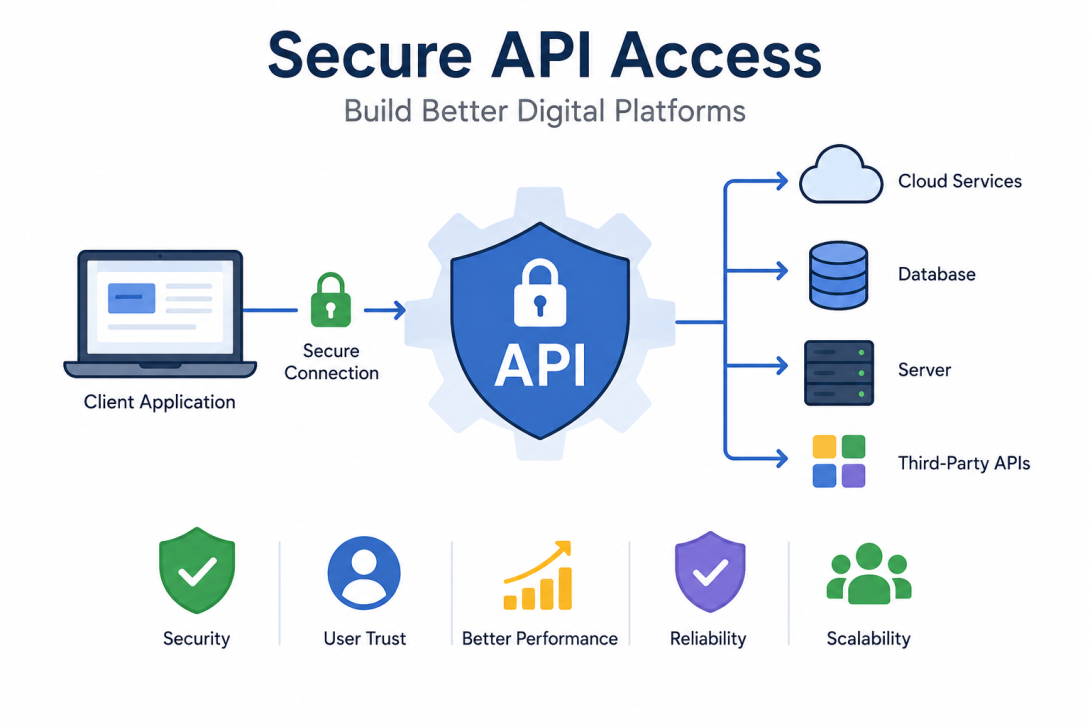
Modern digital platforms depend on smooth communication between applications, services, and devices. Whether it is an ecommerce store processing payments, a travel platform showing live booking data, or a finance app updating currency rates, APIs are working behind the scenes to keep everything connected.
For businesses and developers, secure API access is no longer just a technical requirement. It has become a major factor in building reliable, scalable, and trusted digital experiences. Without proper security, even a well designed platform can face data leaks, service disruptions, and loss of customer confidence.
A secure API strategy helps organizations protect sensitive information while also improving application performance and user experience. It creates a safer environment for developers to build integrations and for businesses to grow digital services with confidence.
Understanding the Role of APIs in Digital Platforms
An API allows different software systems to communicate with each other. Instead of building every feature from scratch, developers can connect applications to external services for payments, geolocation, weather data, email verification, and many other functions.
APIs simplify development because they reduce complexity and save time. Businesses can launch products faster while still offering advanced features to users.
For example, a food delivery app may use APIs for:
- Payment processing
- Real time location tracking
- SMS notifications
- Customer authentication
- Delivery updates
Without APIs, developers would need to build every system internally, which would increase development costs and project timelines.
Why Security Matters in API Integration
As APIs exchange data between platforms, they often handle sensitive information such as login credentials, payment details, customer records, and business data. If API connections are not protected properly, attackers may gain unauthorized access to systems.
This can lead to:
- Data theft
- Financial loss
- Service downtime
- Compliance issues
- Damage to brand reputation
Secure APIs help prevent these risks by controlling how users and applications interact with systems. They create a protective layer between the platform and external requests.
Building User Trust Through Secure Connections
Trust is one of the biggest factors behind successful digital platforms. Users expect applications to protect their personal information and deliver secure online experiences.
When APIs are protected with proper authentication and encryption methods, businesses can assure customers that their data is handled responsibly. Secure platforms often experience:
- Better customer retention
- Higher engagement rates
- Increased online transactions
- Stronger brand reputation
A single security incident can reduce customer confidence significantly. This is why companies invest heavily in API security frameworks and monitoring systems.
Authentication Helps Control Access
Authentication verifies the identity of users, applications, or systems trying to connect to an API. It ensures that only approved users can access platform resources.
Common authentication methods include API keys, OAuth tokens, and multi factor authentication. These methods help businesses manage permissions and prevent unauthorized requests.
For example, a banking app may allow customers to access account information only after secure identity verification. This process reduces the chances of fraud and protects financial data.
Authentication also helps developers manage integrations more efficiently because each connection can be tracked and monitored individually.
Encryption Protects Sensitive Data
Encryption converts information into unreadable code during transmission. Even if attackers intercept the data, they cannot understand it without the proper decryption key.
Secure APIs often use HTTPS and SSL encryption to protect communication between systems. This is especially important for platforms handling payments, healthcare records, and personal user information.
Encryption supports digital platform growth because users feel safer while sharing data online. Businesses can also meet industry compliance standards more effectively.
Secure APIs Improve Platform Stability
A poorly secured API can become a target for spam requests, cyberattacks, and system abuse. Excessive requests may overload servers and reduce platform performance.
Secure APIs often include rate limiting and traffic monitoring features to control request volumes. These protections help platforms maintain stability even during high traffic periods.
As a result, businesses experience:
- Faster response times
- Reduced downtime
- Better application performance
- Improved customer satisfaction
Reliable platforms are more likely to retain users and attract long term customers.
Better Security Supports Faster Scaling
Digital businesses often grow quickly. As user traffic increases, platforms need systems that can scale without creating security risks.
Secure APIs support growth because they provide structured access management. Businesses can safely connect new applications, third party services, and mobile platforms without exposing sensitive systems.
This flexibility is valuable for startups and enterprises alike. Developers can expand platform capabilities while maintaining security standards across all integrations.
How Secure APIs Help Developers
A reliable developer api environment allows teams to work more efficiently and confidently. Developers prefer APIs that offer clear documentation, authentication support, and stable performance.
Secure APIs improve the development process because they reduce the chances of system vulnerabilities and unexpected failures. This helps developers focus more on innovation instead of troubleshooting security issues.
Well secured APIs also encourage collaboration between platforms. Businesses can partner with external services more easily when integrations follow trusted security practices.
API Monitoring Helps Detect Problems Early
Monitoring tools play an important role in API security. Businesses can track unusual behavior, failed login attempts, or suspicious traffic patterns before they become serious threats.
Real time monitoring allows teams to:
- Detect vulnerabilities quickly
- Prevent unauthorized access
- Improve system reliability
- Maintain service quality
Early detection reduces the impact of security incidents and helps organizations respond faster.
Compliance Becomes Easier With Secure APIs
Many industries must follow strict regulations related to data protection and privacy. Finance, healthcare, and ecommerce businesses often need secure systems to meet legal standards.
Secure APIs help organizations maintain compliance by protecting user data and maintaining controlled access records. This reduces legal risks and strengthens business credibility.
Compliance is not only about avoiding penalties. It also demonstrates professionalism and responsibility to customers and business partners.
The Connection Between Security and User Experience
Some businesses assume security measures make platforms more difficult to use. In reality, secure systems often improve the user experience.
When APIs are properly managed, users benefit from:
- Faster application performance
- Safe transactions
- Stable connectivity
- Reliable account protection
- Consistent digital experiences
Customers are more likely to continue using platforms that feel safe and dependable.
Choosing the Right API Security Strategy
Businesses should focus on long term security planning instead of temporary fixes. A strong API strategy usually includes:
Strong Authentication
Use secure login methods and token based verification to control access.
Encryption Standards
Protect data during transmission with secure communication protocols.
Regular Monitoring
Track API traffic and identify suspicious activities quickly.
Access Management
Limit permissions based on user roles and responsibilities.
Security Testing
Perform regular testing to identify vulnerabilities before attackers do.
These practices help businesses build secure and scalable digital ecosystems.
Future Growth Depends on Secure Infrastructure
Digital platforms continue to expand across industries including ecommerce, fintech, healthcare, education, and logistics. APIs will remain central to this growth because they connect systems and simplify digital operations.
However, growth without security creates major risks. Businesses that invest in secure API infrastructure are better prepared for long term success. They can protect customer data, support developers, maintain platform performance, and scale operations more effectively.
Secure APIs are not just technical tools. They are part of the foundation that supports modern digital business growth and customer trust.
Conclusion
Secure APIs play a major role in creating reliable and scalable digital platforms. They help businesses protect sensitive information, improve performance, maintain customer trust, and support long term growth.
As digital services become more connected, companies must focus on building secure integration systems that protect both users and business operations. Strong authentication, encryption, monitoring, and access management all contribute to better platform security and stability.
Businesses that prioritize secure integrations can create better online experiences while giving developers the confidence to build innovative applications using trusted systems and modern developer api solutions.
FAQs
Why is API security important for digital platforms?
API security protects sensitive data, prevents unauthorized access, and helps platforms maintain stable and reliable services. It also improves customer trust and reduces business risks.
How does secure API access improve customer experience?
Secure APIs help platforms deliver safe transactions, faster performance, and reliable digital experiences. Users feel more confident using services that protect their personal information.
What are the common methods used to secure APIs?
Businesses often use authentication tokens, encryption protocols, rate limiting, monitoring tools, and access management systems to secure API connections and prevent cyber threats.