

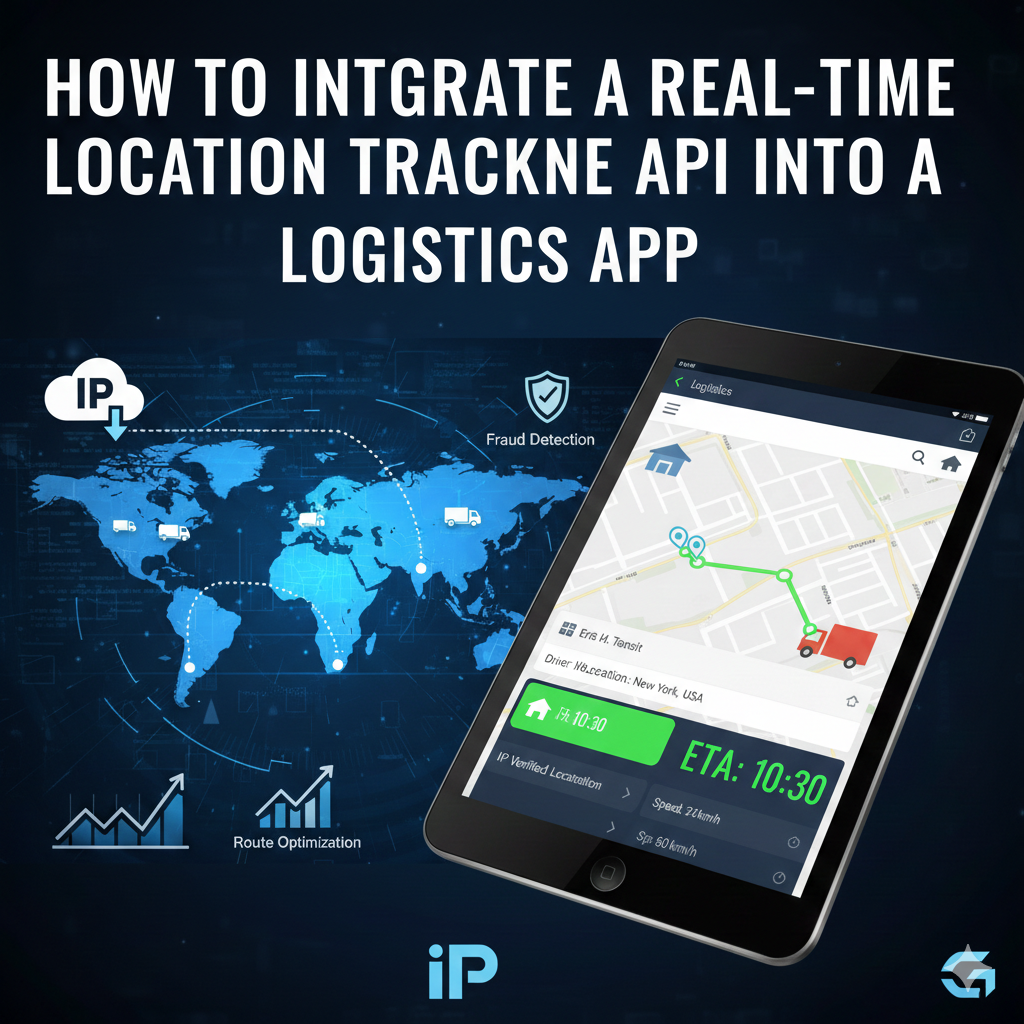
Real-time visibility is no longer a luxury, it’s an expectation. Customers want to track shipments instantly, logistics managers need live fleet insights, and businesses require accurate regional data to optimize operations. To make this possible, many modern logistics platforms rely on a reliable IP geolocation API to enhance tracking systems and improve operational intelligence.
While GPS remains essential for vehicle-level tracking, IP-based location technology adds another valuable layer of intelligence. A real-time IP location API allows logistics apps to identify user locations, detect suspicious activity, optimize routing, and personalize delivery experiences based on regional data. When implemented correctly, an accurate IP lookup API can strengthen your tracking infrastructure without adding hardware complexity.
In this guide, we’ll walk through how to integrate an IP-based tracking solution into your logistics app and what to consider when choosing the best IP API for apps.
Why Real-Time Location Tracking Matters in Logistics
Real-time tracking has transformed logistics in several key ways:
1. Enhanced Customer Experience
Customers expect instant updates on delivery progress. Live dashboards powered by an IP address location service can help verify delivery regions and ensure transparency.
2. Route Optimization
Knowing the approximate location of users, warehouses, or dispatch points helps streamline last-mile delivery. An accurate IP lookup API can provide regional insights that support dynamic routing decisions.
3. Fraud Prevention
IP intelligence can detect mismatched delivery addresses or suspicious login activity, reducing fraud risk in logistics platforms.
4. Operational Transparency
From warehouse management to cross-border shipping, real-time tracking improves communication across stakeholders.
5. Compliance and Regional Control
Geolocation data supports tax calculations, customs documentation, and region-based service restrictions.
Understanding How IP Geolocation Works
IP geolocation identifies the approximate location of a device based on its IP address. When a device connects to the internet, its IP address is assigned by an Internet Service Provider (ISP). Geolocation providers analyze this IP address using extensive databases compiled from:
- Regional internet registries
- ISP routing data
- Network infrastructure mapping
- Public and private data partnerships
A real-time IP location API processes this data and returns structured information such as:
- Country
- Region/state
- City
- Postal code
- Time zone
- ISP details
While IP tracking is not as precise as GPS, it is extremely effective for identifying regional presence, validating user locations, and enhancing logistics workflows. For developers, integrating an IP geolocation API for developers offers a lightweight and scalable method of adding location intelligence without heavy device dependencies.
Key Features to Look for in a Reliable IP Geolocation API
Choosing the right provider is critical. Here’s what to evaluate:
1. High Accuracy and Frequent Updates
A reliable IP geolocation API should regularly update its database to maintain accuracy. Logistics decisions depend on precise regional information.
2. Fast Response Time
Low latency is essential. APIs that respond in milliseconds ensure your logistics app remains fast and responsive.
3. Scalability
Your app may process thousands, or millions, of tracking requests daily. The best IP API for apps should handle high request volumes without performance degradation.
4. Developer-Friendly Integration
Look for:
- RESTful endpoints
- JSON responses
- Clear documentation
- SDK availability
For example, platforms like ipstack provide straightforward API responses that developers can easily integrate into existing logistics systems.
5. Security & Compliance
Ensure the API supports HTTPS encryption and complies with data protection regulations such as GDPR.
Step-by-Step Guide: Integrating a Real-Time IP Location API into Your Logistics App
Step 1: Choose the Right IP Geolocation Provider
Evaluate providers based on:
- Accuracy rates
- Pricing tiers
- Uptime guarantees
- Data refresh frequency
- Support and documentation
Select a reliable IP geolocation API that aligns with your logistics app’s traffic volume and growth projections.
Step 2: Obtain API Access Credentials
After selecting your provider:
- Register for an account
- Generate an API key
- Secure your authentication credentials
Most providers authenticate requests via an API key passed in the request URL or headers.
Step 3: Make Your First API Request
A typical API request might look like this:
GET https://api.provider.com/check?access_key=YOUR_ACCESS_KEY&ip=134.201.25…
The response will usually return structured JSON data containing location information such as country, region, latitude, and longitude.
An accurate IP lookup API ensures that the returned data can be confidently used within logistics workflows.
Step 4: Parse and Store Location Data
Extract essential fields like:
- Country
- Region
- City
- Latitude and longitude
Store this data in your logistics database to enhance shipment tracking, risk analysis, and analytics dashboards.
Step 5: Display Location Data in the App
Integrate location insights into:
- Shipment tracking dashboards
- Admin panels
- Delivery verification systems
Use real-time updates to keep data fresh. A real-time IP location API ensures minimal delay in displaying updated location insights.
Step 6: Monitor and Optimize Performance
Implement:
- Caching for repeated IP lookups
- Error handling mechanisms
- Rate limit monitoring
Some developers integrate services like ipstack to benefit from scalable infrastructure and predictable response times in logistics-heavy environments.
Use Cases of IP Geolocation in Logistics Applications
1. Shipment Verification
Validate whether users accessing tracking portals are located in expected regions using an IP address location service.
2. Fraud Detection
An accurate IP lookup API can flag discrepancies between billing addresses and IP locations.
3. Geo-Based Delivery Optimization
Adjust delivery timelines based on region-specific traffic and service coverage.
4. Regional Pricing Automation
Display region-specific shipping costs dynamically.
5. Compliance Support
Ensure shipments comply with local regulations by validating origin and destination regions.
Common Challenges and How to Overcome Them
1. IP Accuracy Limitations
IP data provides approximate, not exact, location. Combine it with GPS tracking for higher precision.
2. VPN and Proxy Usage
Some users mask their IP addresses. Choose providers that offer proxy detection features.
3. Dynamic IP Addresses
ISPs frequently rotate IP addresses. Rely on providers with frequently updated databases.
4. API Downtime Risks
Always implement fallback logic in case the API fails.
5. Rate Limits
Optimize usage with caching and batch requests to avoid hitting limits.
Best Practices for Implementing IP Location APIs in Logistics
- Combine IP tracking with GPS for layered accuracy
- Cache location responses intelligently
- Use HTTPS for secure communication
- Monitor API latency regularly
- Choose the best IP API for apps that scales with your growth
- Ensure compliance with data privacy regulations
A strong IP geolocation API for developers should simplify integration while maintaining enterprise-level reliability.
Frequently Asked Questions (FAQs)
1. Is an IP geolocation API accurate enough for logistics tracking?
An accurate IP lookup API provides reliable regional data such as country, city, and ISP. While it may not replace GPS for vehicle tracking, it significantly enhances fraud detection, user verification, and regional analytics.
2. How fast does a real-time IP location API respond?
Most modern APIs respond within milliseconds, making them suitable for high-performance logistics applications.
3. Can IP geolocation detect VPN usage?
Many providers include proxy and VPN detection features, which are helpful for fraud prevention in logistics platforms.
4. Is it secure to use an IP address location service?
Yes, as long as the API uses HTTPS encryption and complies with privacy regulations.
5. What makes a reliable IP geolocation API?
Key factors include database accuracy, frequent updates, low latency, scalability, and strong developer documentation.
Integrating a reliable IP geolocation API into your logistics app can significantly enhance visibility, fraud detection, operational efficiency, and customer satisfaction. While GPS tracking remains vital for fleet monitoring, IP-based intelligence adds an additional layer of regional verification and insight.
By choosing a scalable real-time IP location API, implementing proper caching strategies, and combining IP data with other tracking technologies, you can build a smarter and more resilient logistics platform.
As logistics continues to evolve, apps that leverage accurate and scalable location intelligence will lead the way in efficiency, transparency, and innovation.
Thumbnail Generated From: https://gemini.google.com/