
Introduction
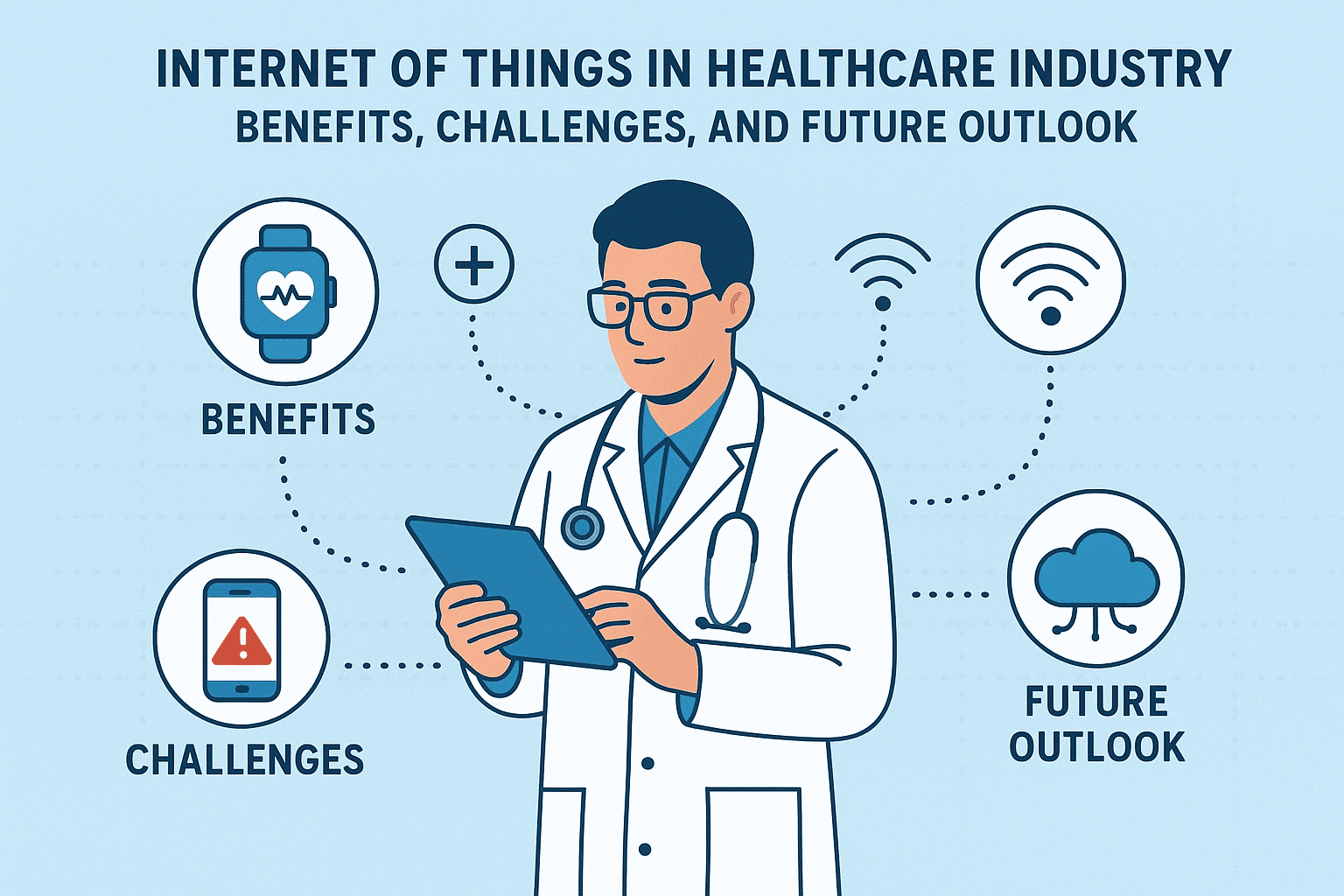
Similarly, IoT in healthcare is changing the way medical services are provided, tracked and managed. With smart wearables to monitor patient vitals and connected devices to simplify hospital management, the Internet of Things is transforming how healthcare is delivered in terms of efficiency and accessibility.
As the industry continues to shift toward data-driven healthcare, IoT provides a route for smarter, predictive and more patient-centric care that is transforming medicine as we know it.
How IoT is Revolutionizing the Healthcare Industry
The Internet of Things in healthcare is transforming the medical industry by bringing together medical devices, apps and systems for seamless exchange and transmission of information. Thus, it facilitates constant accompaniment, immediate communication and instant treatment between patients and health-care providers.
Today smart devices are monitoring vital signs like heart rate, glucose level and oxygen, among others and transmitting the data to doctors for earlier diagnosis and treatment.
Additionally, IoT in Healthcare enables telemedicine because it allows for virtual diagnosis and treatment plans (in which care is provided remotely by means of telecommunications) and has benefits for the elderly, rural and chronic patients who don’t often visit hospitals.
Key Components of IoT in Healthcare Systems
Key elements facilitate smooth data exchange, monitoring and automation in the Internet of Things healthcare domain as follows: Here are the important aspects that drive IoT-enabled healthcare systems:
1. Sensors and Devices:
These represent the main instruments for data acquisition in IoT systems. That includes medical IoT devices such as smartwatches, glucose meters, ECG monitors and fitness trackers that constantly collect patient data.
2. Connectivity Networks:
Devices are able to exchange data securely because of connectivity. Wireless technologies, including Wi-Fi, Bluetooth 5G and LPWAN ensure that the healthcare data flows fast between these devices and cloud systems.
3. Cloud Computing Platforms:
Internet of Things (IoT) healthcare systems largely depend on cloud infrastructure for efficient storage and computation of enormous amounts of health data. The cloud brings scalability and reach to both patients and practitioners.
4. Data Analytics and AI Integration:
AI and machine learning crunch numbers on patient data to spot trends, forecast potential health problems. Such a data-based perspective affords a smart healthcare system, better informed decisions at the point-of-care.
5. User Interfaces (Dashboards):
Real-time insights for providers and clinicians are accessed via easy-to-use dashboards. These screens allow us to see real-time data, monitor progress and make statistical-based medical decisions.
The combination of these elements, make the healthcare IoT a connected ecosystem which results in better care and operational efficiency.
Top Applications of IoT in the Healthcare Industry
The Internet of Things in healthcare industry has enabled numerous innovative applications that are transforming patient care and hospital operations. Below are some of the most impactful IoT use cases in modern healthcare.
1. Remote Patient Monitoring
One of the most significant IoT Healthcare Applications is remote patient monitoring (RPM). Connected devices such as ECG sensors, blood pressure monitors, and glucose meters continuously track patients’ vitals and share real-time data with doctors. This reduces hospital visits and allows effective management of chronic conditions from anywhere.
2. Smart Wearable Devices
Wearable health technology like smartwatches and fitness bands has become essential for health tracking. These devices monitor heart rate, activity, and sleep while providing doctors with accurate insights into patient well-being.
3. Hospital Asset Tracking
IoT helps hospitals efficiently manage equipment. Smart sensors attached to wheelchairs, ventilators, and other tools enable real-time tracking, prevent loss, and optimize asset utilization.
4. Medication Management
IoT-based dispensers remind patients to take medicines on time and alert caregivers about missed doses. This ensures better medication adherence and reduces treatment errors.
5. Smart Healthcare Systems
Hospitals now use smart healthcare systems powered by IoT to automate check-ins, scheduling, and resource allocation. This streamlines operations, improves accuracy, and saves staff time.
6. IoT in Emergency Response
During emergencies, IoT systems enable quick data sharing between ambulances and hospitals. Medical teams receive real-time patient data in advance, ensuring faster and more accurate treatment upon arrival.
Key Benefits of IoT in Healthcare
The adoption of the Internet of Things in healthcare industry offers multiple advantages for both patients and healthcare providers. Below are the key benefits driving its rapid growth:
1. Enhanced Patient Monitoring – Enables real-time tracking of patient vitals, reducing hospital visits and improving continuous care.
2. Improved Diagnosis and Treatment – Provides accurate data for quicker diagnosis and more personalised treatment plans.
3. Operational Efficiency – Automates routine administrative tasks, allowing staff to focus more on patient care.
4. Reduced Healthcare Costs – Minimises hospital readmissions and maintenance costs through predictive monitoring.
5. Early Disease Detection – Detects irregular health patterns early, enabling timely medical intervention.
6. Better Medication Management – Smart reminders ensure patients take medicines on time and maintain adherence.
7. Enhanced Patient Experience – Delivers personalised, efficient, and remote healthcare services for higher satisfaction.
Challenges and Risks of IoT Implementation in Healthcare
The Internet of Things in healthcare industry faces challenges related to data privacy, interoperability, and high setup costs. These issues slow down large-scale adoption despite IoT’s clear advantages.
Data security remains a top concern as connected devices handle sensitive medical records vulnerable to cyberattacks. Ensuring robust encryption and compliance with privacy regulations is essential.
Another major issue is device compatibility and maintenance costs. Different system standards and expensive infrastructure make it difficult for smaller healthcare facilities to implement IoT efficiently.
Future Outlook: What’s Next for IoT in the Healthcare Industry
The Internet of Things in healthcare industry is heading toward smarter, data-driven ecosystems powered by AI and 5G. These advancements will enable predictive care and faster, more personalised treatments.
Future innovations will focus on customised healthcare, where AI and analytics help design treatments based on genetics and real-time health patterns. This will enhance accuracy and prevention.
The rise of Remote IoT Monitoring Solutions will make home-based healthcare more accessible. Patients will receive continuous care, while hospitals ensure efficiency through predictive maintenance and connected systems.
Conclusion
The Internet of Things in healthcare industry is revolutionizing modern day medicine with the devices, patients, and professionals being connected in real time. Although security and standardisation is a concern, the advantages deserve the risks associated. From remote monitoring to predictive analytics, IoT is moving healthcare closer to an increasingly connected, data-centric world. To learn more about tailored IoT systems, visit Healthcare IoT solutions for smarter patient care.