
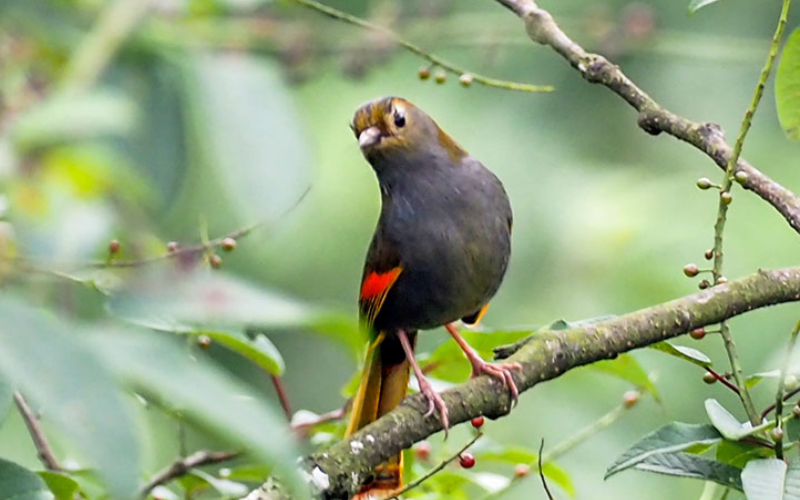
If you’re dreaming about rare pheasants, colorful rosefinches, and maybe even spotting a Red Panda in the wild, Sichuan birding tours should absolutely be on your radar. But many first - time visitors don’t realize right away that a lot of the best birding spots in Sichuan sit at seriously high elevations.
We’re talking 3,000 to 4,000 meters (that’s around 10,000 - 13,000 feet). For comparison, that’s higher than most ski resorts in Colorado.
Don’t worry though. With a little planning, birding at altitude can be incredibly rewarding, and honestly, some of the coolest species in Asia live up there.
Let’s break down a few practical tips to make the experience smooth, safe, and packed with lifer birds.
I. Give Your Body Time to Adjust
One of the most common questions birders ask before visiting western China is : “Will altitude affect me ?”
The short answer is that it might.
High - altitude locations like the Tibetan Plateau edge and mountain passes around Balang or Ruoergai can feel noticeably thinner on oxygen. The key is acclimatization.
Good birding itineraries gradually move upward so your body has time to adapt. A typical route might start around Chengdu (about 500 meters) before heading toward higher sites.
A few easy tips help a lot :
- Drink plenty of water throughout the day
- Avoid heavy alcohol the first couple nights
- Walk slowly on steep trails
- Get good sleep when possible
Think of it less like a race and more like a long, scenic bird walk.
II. Pack Smart for Mountain Weather
Another thing that surprises visitors is that mountain weather changes fast.
In Sichuan, you might start birding in sunshine, then hit fog, wind, or even snow by afternoon. That’s why layering is your best friend.
A solid birding kit usually includes :
- Lightweight waterproof jacket
- Warm fleece or insulated layer
- Hat and gloves for early mornings
- Comfortable hiking boots with grip
Even during spring birding season, temperatures can drop quickly once you climb above the tree line.
III. Know the Birds That Love High Elevations
Altitude often equals special birds you can’t see elsewhere.
Many of the most sought - after species in western China live in alpine forests, plateau grasslands, or high mountain slopes.
Some famous high - elevation targets include :
- Chinese Monal - A stunning Himalayan pheasant
- Tibetan Snowcock - A true high-mountain specialist
- Grandala - Deep blue flocks that look unreal in sunlight
- Crested Tit-Warbler - Tiny but full of personality
If luck is on your side, you might also encounter mammals like Tibetan Fox or Himalayan Marmot while scanning open plateaus.
Basically, the higher you go, the more unique the wildlife becomes.
IV. Take It Slow and Enjoy the Scenery
Birders sometimes get caught up in the “find the next species” mindset. That’s totally understandable since life lists are serious business.
But a high - altitude birding tour in Sichuan is also about the landscape.
Snow - capped peaks, alpine meadows, glaciers, and endless mountain ridges make the region feel almost surreal. Even between bird sightings, the views alone are worth the trip.
And honestly, some of the best bird moments happen when you slow down, like spotting a lammergeier soaring above a valley or hearing a pheasant call echo through the forest.
V. Go with Guides Who Know the Terrain
High - elevation birding can be tricky if you’re unfamiliar with the region. Many of the best birding spots are remote mountain roads or forest trails where local knowledge makes a huge difference.
Experienced guides understand where target species feed, how weather affects bird activity, and how to pace travel at altitude. That’s why many birders choose organized trips from specialists like Alpine Birding when planning their itinerary.
With the right preparation, patience, and a sense of adventure, Sichuan birding tours can deliver one of the most exciting high - altitude birding experiences anywhere in the world.