Introduction
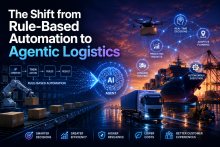
Logistics has long relied on automation such as automated sorting, shipment assignment, reorder alerts, and route planning. These systems boost speed and cut manual work, but follow fixed rules: if a condition occurs, a specific action follows. This works when operations are predictable, but modern supply chains rarely stay that way. Weather, traffic, delays, demand shifts, labor shortages, and disruptions can change things within hours, making old rules obsolete.